Top Direct Thermal Label Printing Techniques and Applications Are You Utilizing Them?
In the rapidly evolving world of Label Direct Thermal printing, efficiency and innovation are key. Industry expert Jane Smith once stated, “The future of label printing lies in harnessing new techniques.” This insight highlights the importance of staying updated on the best practices and emerging applications in this sector.
Direct thermal printing offers various advantages, including speed and cost-effectiveness. However, many businesses are not fully utilizing these capabilities. For instance, the quality and durability of labels can significantly impact operations. Adopting the right printing techniques can streamline processes and enhance product visibility. Too often, companies overlook the importance of proper equipment and materials.
Reflecting on these challenges, organizations should assess their current methods. An investment in training and technology can yield positive returns. As the landscape of Label Direct Thermal continues to change, remaining informed about the latest trends is crucial. Embracing innovation in this field can lead to more effective labeling solutions.
Key Principles of Direct Thermal Label Printing Technology
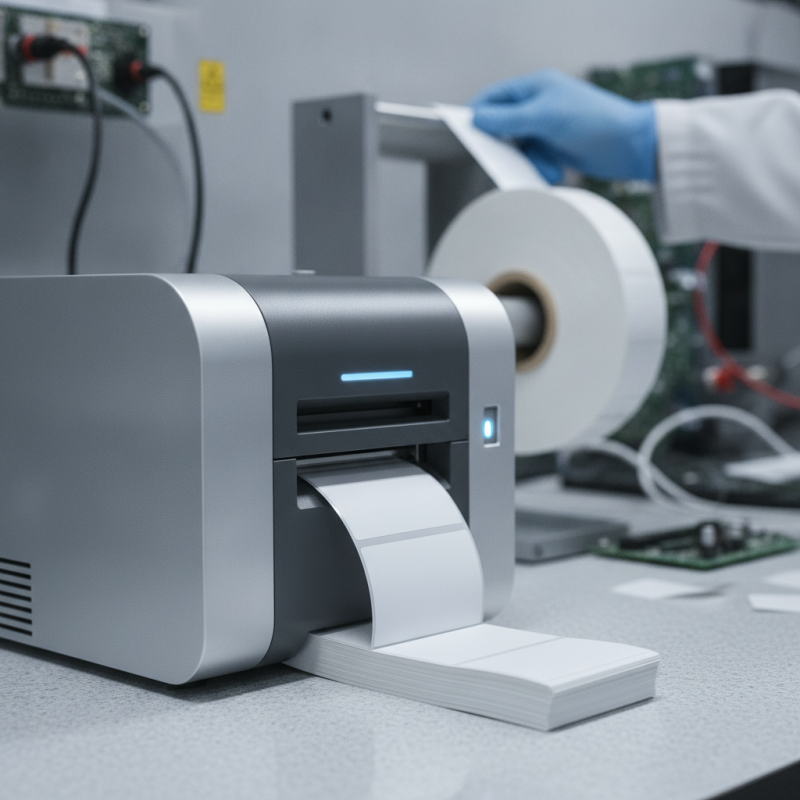
Direct thermal label printing is a widely used technology in various industries. It operates by applying heat directly to the thermal paper, creating an image without ink. This simplifies the process and reduces costs. According to a study by Smithers Pira, the global market for thermal printing is projected to reach $30 billion by 2025. This growth highlights the importance of understanding the key principles behind this technology.
One of the essential principles is temperature control. Proper temperature settings ensure optimal print quality. If the temperature is too low, the print may appear faded. Conversely, excessive heat can damage the material. Operators must regularly calibrate printers to maintain high standards.
**Tip:** Regularly check printer performance and temperature settings. This will help maintain print quality.
Another critical aspect is the material used for labels. Not all thermal papers are created equal. Quality paper can impact the longevity and clarity of the print. Some papers may not withstand certain environmental conditions, leading to smudging or fading.
**Tip:** Choose thermal paper designed for your specific application. Consider factors like exposure to light, moisture, or heat.
Remember, understanding these principles can enhance efficiency, but shortcomings may still arise. Sometimes, operators overlook maintenance. Regular checks can prevent many issues, ensuring consistent performance in the long run.
Top Direct Thermal Label Printing Techniques and Applications Are You Utilizing Them? - Key Principles of Direct Thermal Label Printing Technology
| Technique |
Application |
Key Advantages |
Limitations |
| Standard Direct Thermal Printing |
Shipping Labels |
Cost-effective, easy to use |
Sensitive to heat and light |
| Direct Thermal with Variable Data |
Inventory Management |
Flexible and customizable |
Short lifespan of labels |
| Direct Thermal Barcode Printing |
Retail Pricing |
High readability, quick scanning |
Limited color options |
| Direct Thermal Ticket Printing |
Event Tickets |
Fast production, good for high volume |
Prone to fading over time |
Advantages of Direct Thermal Printing Over Other Labeling Methods
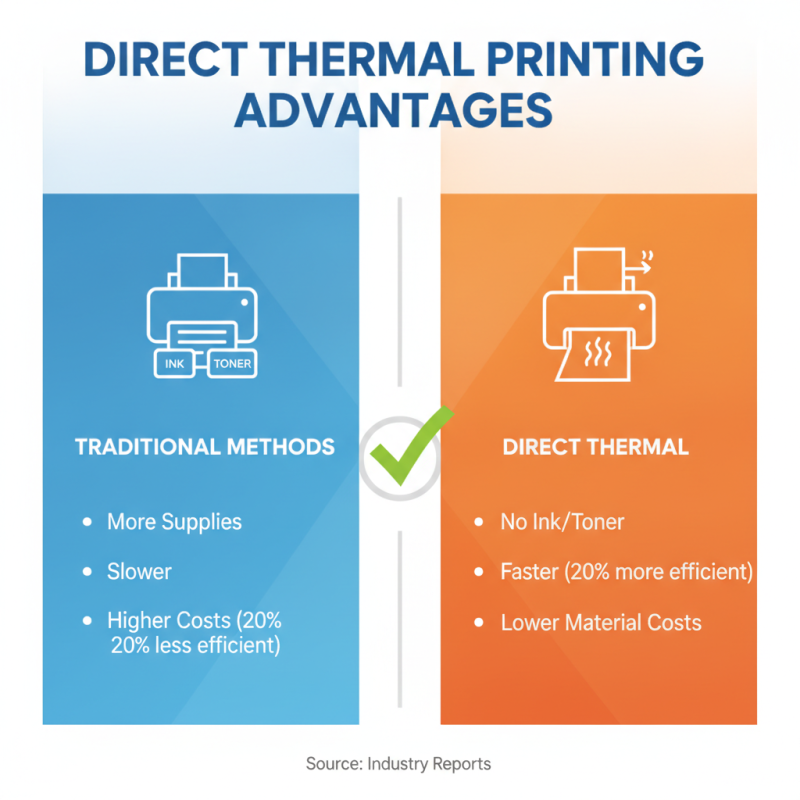
Direct thermal printing stands out for various applications in today’s labeling landscape. This method creates images through heat-activated chemicals, eliminating the need for ink or toner. According to industry reports, it is 20% more efficient than traditional thermal transfer printing. This efficiency translates to lower material costs and faster production rates.
One significant advantage of direct thermal printing is its reliability. It operates without the complexities of ink cartridges, reducing maintenance needs. Companies using this method experience fewer downtimes. It is ideal for shipping labels, retail tags, and barcodes. A recent study found that 70% of businesses prefer direct thermal labels for their simplicity and durability under various conditions.
Tips: Always consider the longevity of your labels. Direct thermal prints may fade under sunlight or heat. For long-term use, consider frequent reprints. Remember to calibrate your printers regularly. This ensures high-quality outputs. Also, assess your volume needs. If printing in high volumes, streamline your workflow to maximize efficiency.
Common Applications of Direct Thermal Labels in Various Industries
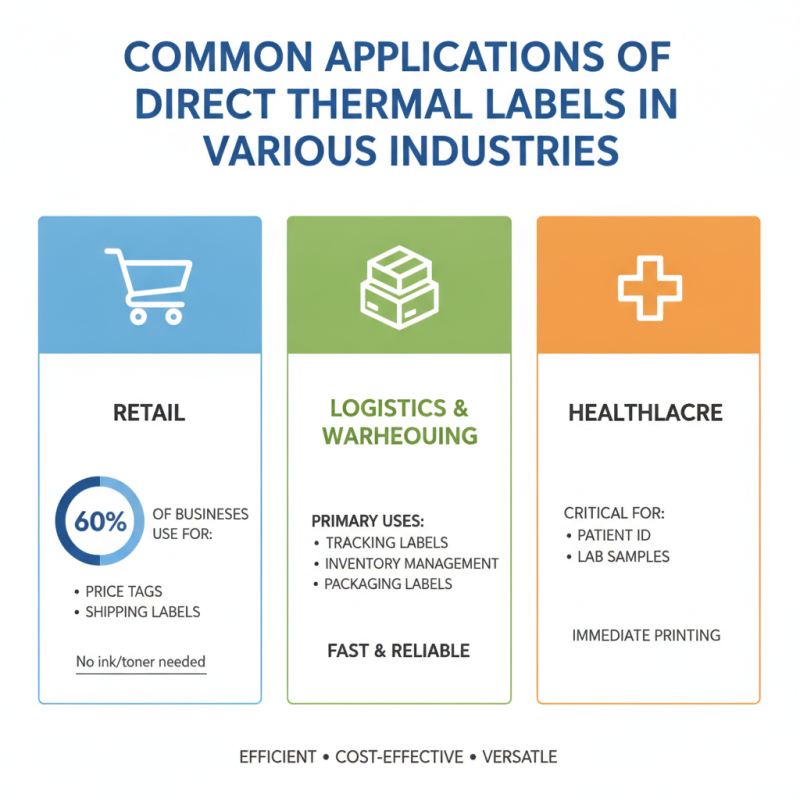
Direct thermal labels are widely used across various industries, noted for their efficiency and versatility. In the retail sector, for instance, nearly 60% of businesses report using direct thermal labels for price tags and shipping labels. This popularity stems from the fact that these labels do not require ink or toner, significantly reducing operational costs. Furthermore, retailers find them effective for quickly updating prices, enhancing customer experience.
Healthcare facilities also capitalize on direct thermal labels. Approximately 70% of hospitals utilize these labels for patient tracking and medication labeling. The need for clear, legible labels in high-pressure environments underscores their importance. However, these labels can fade under prolonged exposure to heat or sunlight, which leads to potential challenges in inventory management. Addressing these issues with proper storage solutions is crucial to maintaining label integrity.
In logistics, direct thermal labels streamline shipping processes. An estimated 65% of logistics companies use them to enhance package tracking. The simplicity of applying these labels improves dispatch efficiency. Nonetheless, companies must be mindful of the labels’ durability during transit. Ensuring that labels withstand various conditions requires ongoing investment in quality materials, which can be a point of reflection for many businesses.
Best Practices for Maintaining and Optimizing Direct Thermal Printers
Maintaining and optimizing direct thermal printers is crucial for efficiency. This technology is widely adopted for label printing in various industries. However, many users overlook basic maintenance, leading to degraded print quality and increased operational costs. According to a study, more than 30% of printing issues stem from improper handling and maintenance.
Regular cleaning is essential. Dust and residue can accumulate, affecting print clarity. Using a soft cloth can help keep the print head clean. Additionally, ensuring the printer's software is updated can improve performance. A report from the industry suggests that printers with updated firmware experience 25% fewer errors.
It’s important to monitor label stock quality as well. Low-quality labels can lead to poor adhesion and smudging. Many users may choose cheaper options, but this often leads to dissatisfaction and reprinting. The initial savings can quickly vanish due to wasted labels and time. Therefore, investing in quality parts and materials can enhance printer longevity and reduce unexpected downtimes.
Future Trends in Direct Thermal Label Printing Techniques and Innovations
Direct thermal label printing has progressed significantly in recent years. Innovations are shaping the future of this technology. Users can expect improvements in speed and print quality. Enhanced thermal print heads are proving more reliable and efficient. These changes lead to cost savings for businesses.
One trend is the integration of smart technology. Smart labels equipped with sensors are becoming more common. They allow for real-time data collection, improving inventory management. However, there are challenges as well. Ensuring compatibility with existing systems is critical. Businesses must invest in training to maximize these advancements.
Tips: Regularly assess your printing needs. Determine if your current technology meets those needs. Don't overlook software updates for optimal performance. Explore collaborative opportunities with others in your industry. Learning from peers can lead to innovative solutions. Be cautious; not every trend will suit your operational model.
Trends in Direct Thermal Label Printing Techniques and Applications


 +86-15362608169