Top 10 Thermal Label Sticker Roll Options for Your Business Needs?
In today's fast-paced business environment, selecting the right Thermal Label Sticker Roll is crucial. Businesses face numerous challenges while trying to enhance efficiency and reduce operational costs. According to recent industry reports, the global thermal transfer label market is expected to reach USD 38 billion by 2026, underscoring the increased demand for high-quality labeling solutions.
A well-chosen Thermal Label Sticker Roll can streamline logistics, optimize inventory management, and improve customer satisfaction. However, not every option on the market meets the diverse needs of a business. For instance, choosing a label roll that performs poorly in specific environments can lead to costly errors and wasted resources. The rise of artificial intelligence in trade shows, such as the 139th Canton Fair, highlights the need for informed decision-making, allowing companies to connect with certified suppliers more effectively.
Understanding the specifications that define a quality Thermal Label Sticker Roll is essential. Factors such as adhesive strength, print quality, and durability play a significant role in the selection process. It's important for businesses to reflect on their unique requirements to avoid common pitfalls in the labeling process.

Top Characteristics to Look for in Thermal Label Sticker Rolls
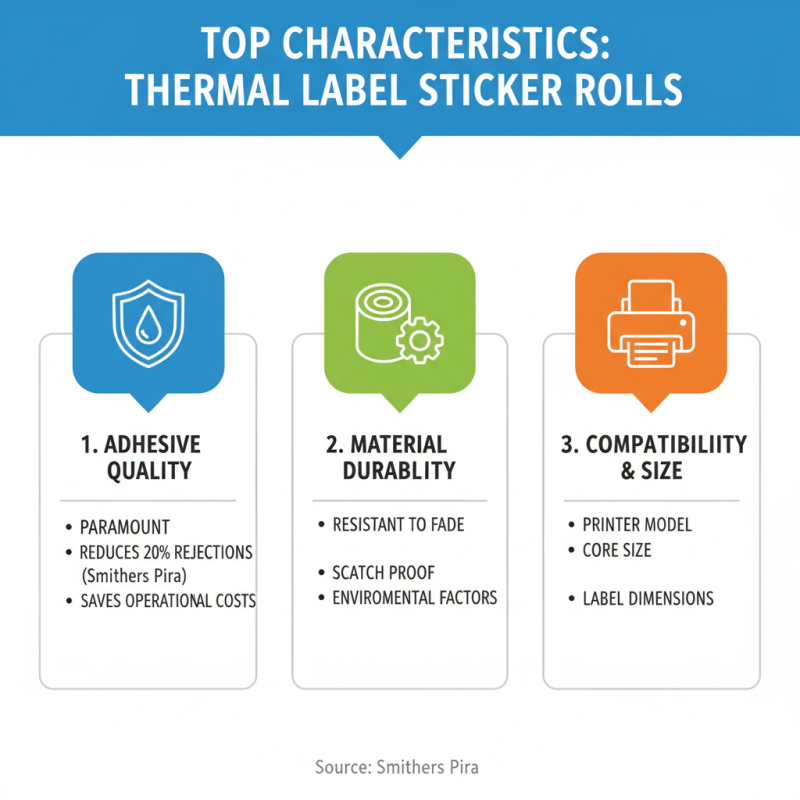
When selecting thermal label sticker rolls, several key characteristics are crucial to meet business needs. The adhesive quality is paramount. A study by Smithers Pira indicates that adhesive failures account for up to 20% of label rejections. Labels that do not adhere properly can lead to significant operational costs. Therefore, investing in high-quality adhesives is essential.
Durability is another vital attribute. Labels must withstand various conditions, including temperature fluctuations and moisture exposure. According to a report by the Pressure Sensitive Label Council, 60% of companies recognize that label durability affects their supply chain efficiency. It is important to assess how labels perform under extreme conditions.
Additionally, printability should not be overlooked. Not all thermal printers can handle every type of label. Some materials may result in smudging or fading, affecting legibility. Recent data suggests that 30% of businesses face issues related to print clarity. Evaluating compatibility between your thermal printer and label material can prevent future headaches. The choice requires careful consideration to ensure labels fulfill their purpose effectively.
Understanding Different Types of Thermal Label Adhesives for Businesses
Choosing the right thermal label adhesive is crucial for any business. There are several types available, each with unique benefits. Permanent adhesives bond quickly and securely. They are ideal for items that need to stay labeled. However, once applied, they cannot be removed easily. This can lead to issues if changes are necessary.
Removable adhesives provide flexibility. They allow for label repositioning without leaving residue. This is useful for items that require frequent labeling updates. However, over time, these labels may peel off unintentionally. Businesses need to consider their specific needs when choosing. Sometimes, finding the right balance is challenging.
Some adhesives work in extreme conditions. For cold storage, you may need special formulations. This can complicate your selection process. Not all labels perform well in freezing temperatures. Testing different options can lead to better outcomes. Remember, not every label suggests perfection or ease. Consider your environment and usage carefully.
Comparative Analysis of Thermal Label Sizes and Formats Available
When choosing thermal label sticker rolls, size and format are essential. Various sizes cater to different needs. Standard options include 1" x 2.6", 2" x 3", and 4" x 6". Each size has its purpose, from small shipping labels to larger product tags. It’s crucial to assess your application carefully. Consider the printer compatibility as well. Not all printers handle every size.
The format also matters. You can find labels with and without adhesive backing. Some are perforated for easy tearing, while others are continuous rolls. Each format affects how you use the labels. It’s good to experiment with different options. You may discover a preferred style that enhances your workflow.
**Tip:** Always keep a few samples at hand. This way, you can test different sizes and formats before committing to bulk orders. **Tip:** Think about storage too. Larger rolls may require more space, while smaller ones can easily be tucked away. Adjusting your choice based on workflow can save time and resources.
Top 10 Thermal Label Sticker Roll Options for Your Business Needs
| Label Size (mm) |
Format |
Core Size (mm) |
Labels per Roll |
Material Type |
Special Features |
| 100 x 150 |
Rectangular |
25 |
500 |
Glossy Paper |
Water-resistant |
| 60 x 100 |
Rectangular |
25 |
1000 |
Matte Paper |
Thermal Transfer Compatible |
| 80 x 80 |
Square |
40 |
600 |
Direct Thermal Paper |
Eco-friendly |
| 100 x 100 |
Square |
40 |
800 |
Synthetic Material |
Tear-resistant |
| 110 x 150 |
Rectangular |
25 |
400 |
Plastic |
UV resistant |
| 90 x 120 |
Rectangular |
25 |
650 |
RFID Compatible |
Custom sizes available |
| 150 x 200 |
Rectangular |
40 |
300 |
High-gloss Paper |
Scratch-resistant |
| 120 x 120 |
Square |
40 |
500 |
Paper |
Custom designs supported |
| 75 x 50 |
Rectangular |
25 |
1200 |
Thermal Label |
Easy peel |
| 80 x 50 |
Rectangular |
25 |
1000 |
Satin Finish |
Transparent |
Cost-Effectiveness: Evaluating the Price per Label for Bulk Orders
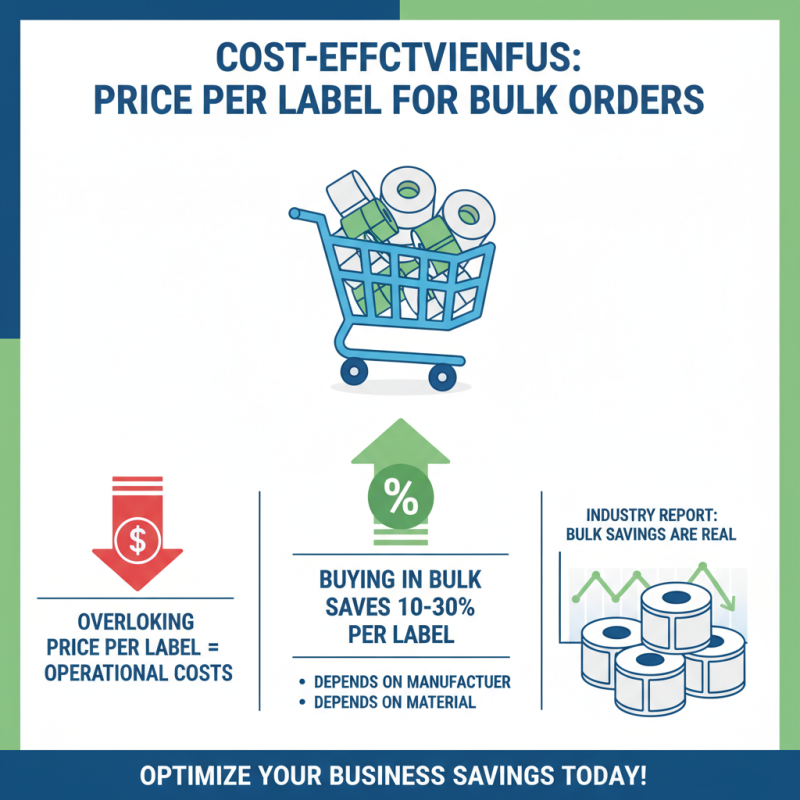
Cost-effectiveness is crucial when choosing thermal label sticker rolls for your business. A recent industry report highlighted that businesses often overlook the price per label in bulk orders. This oversight can lead to increased operational costs. For instance, buying in larger quantities can save companies around 10-30% per label, depending on the manufacturer and material used.
Consider the material's durability, too. High-quality thermal labels resist environmental factors better. This can prevent wastage caused by labels falling off or smudging, ultimately impacting your bottom line. However, some companies still opt for cheaper alternatives, risking quality for savings.
Additionally, many businesses underestimate their label usage. Analyzing past orders can help clarify future needs. This can avoid overordering or stockouts. Accurate forecasting improves efficiency and cost management. With data-driven decisions, companies can navigate bulk purchasing more effectively, ensuring a win-win scenario in the long run.
Key Industries That Benefit from Using Thermal Label Sticker Rolls
Thermal label sticker rolls are incredibly versatile. Many industries rely on these for daily operations. Retail, for example, uses labels for pricing, inventory, and shipping. A well-organized system can save time and prevent errors. However, not all businesses maximize label usage. Some still struggle with legibility or durability.
Healthcare is another key sector benefiting from thermal labels. Hospitals require precise labeling for medications and patient records. Mistakes can lead to serious consequences. Labels must be clear and resistant to smudging. Unfortunately, some facilities overlook the importance of quality labels. This can cause confusion and delays in patient care.
In the logistics industry, thermal labels play a crucial role. They streamline the shipping process and manage assets. But, improper label design can lead to scanning issues. Some companies might rush this process, inviting trouble. Frequent errors can cause costly delays and customer dissatisfaction. It’s essential to allocate time to refine label designs and ensure compliance with standards.


 +86-15362608169