

 +86-15362608169


Company News






The manufacturing sector of the 15th Five-Year Plan
2026-01-19
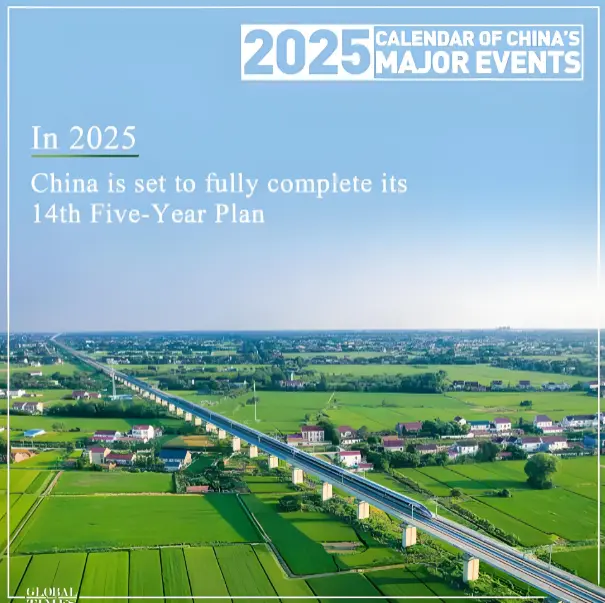
During the transition from the 14th to the 15th Five-Year Plan period, advancing high-quality development fundamentally relies on the real economy, and the development of the real economy is inherently tied to manufacturing. In this context, five strategic priorities have emerged.
First, digital and intelligent transformation. As human society progresses into an era of digital and intelligent civilization, this transformation stands as a defining feature of the new developmental stage. Central to this shift are advancements in digital and intelligent information technologies, along with their extensive and transformative applications across sectors. The frequent mention of "digital intelligence" in the 14th Five-Year Plan proposal—such as the call to "fully implement the 'Artificial Intelligence+' initiative and comprehensively empower all industries"—underscores the critical importance and urgency of this transformation.
Second, the enhancement of service-oriented capabilities. Productive service industries play an indispensable role in elevating the sophistication of manufacturing. Enterprise management consulting, for instance, falls within this category. To drive scientific and technological innovation, supporting services—including research and development, intellectual property, standardization, and branding—are essential. Likewise, business services such as finance, accounting, auditing, credit assessment, and legal support remain vital throughout all stages of industrial development.
To achieve high-quality advancement in manufacturing and the broader real economy, it is imperative to prioritize the robust growth of producer services. Establishing a multi-tiered, high-quality service system that aligns with China’s vast manufacturing capacity—and strengthening both functional capabilities and supply mechanisms in this domain—is of paramount importance.
Third, organic industrial restructuring. Enterprises are the primary drivers of industrial development. Amid intensifying industrial competition and complex international market dynamics, the 15th Five-Year Plan proposal emphasizes the need to "resolutely remove obstacles and bottlenecks hindering the establishment of a unified national market." It further calls for "standardizing local governments’ economic promotion practices" and "comprehensively rectifying instances of regulatory overreach," aiming to foster a more coordinated and efficient industrial ecosystem.
Fourth, international expansion. While the plan highlights "vigorously promoting consumption" and calls for the thorough implementation of special actions to stimulate domestic demand, China’s manufacturing sector still has significant potential for global market penetration. Given the scale of its production capacity, enhancing the intensity and strategic focus of international expansion remains a key priority. Expanding manufacturing's footprint in global markets will be crucial for sustaining long-term growth.
Fifth, green transformation as a foundational principle. The publication of "The Limits to Growth" served as an early warning, and today, sustainable development has become a global consensus. The concept of "lucid waters and lush mountains are invaluable assets" is now widely embraced, and the goal of building an ecological civilization has been formally established. Combined with international efforts to combat climate change and achieve carbon peak and carbon neutrality—the "dual carbon" goals—these developments are steering human society toward a green development pathway. While manufacturing has significantly enriched the material foundation of modern life, it must now consciously integrate green, low-carbon, and circular development models as essential components of its own sustainable growth, gradually internalizing and reinforcing green development as a core driver.